

Google Ads
Source and Destination
- In Polytomic, go to Connections → Add Connection → Google Ads.
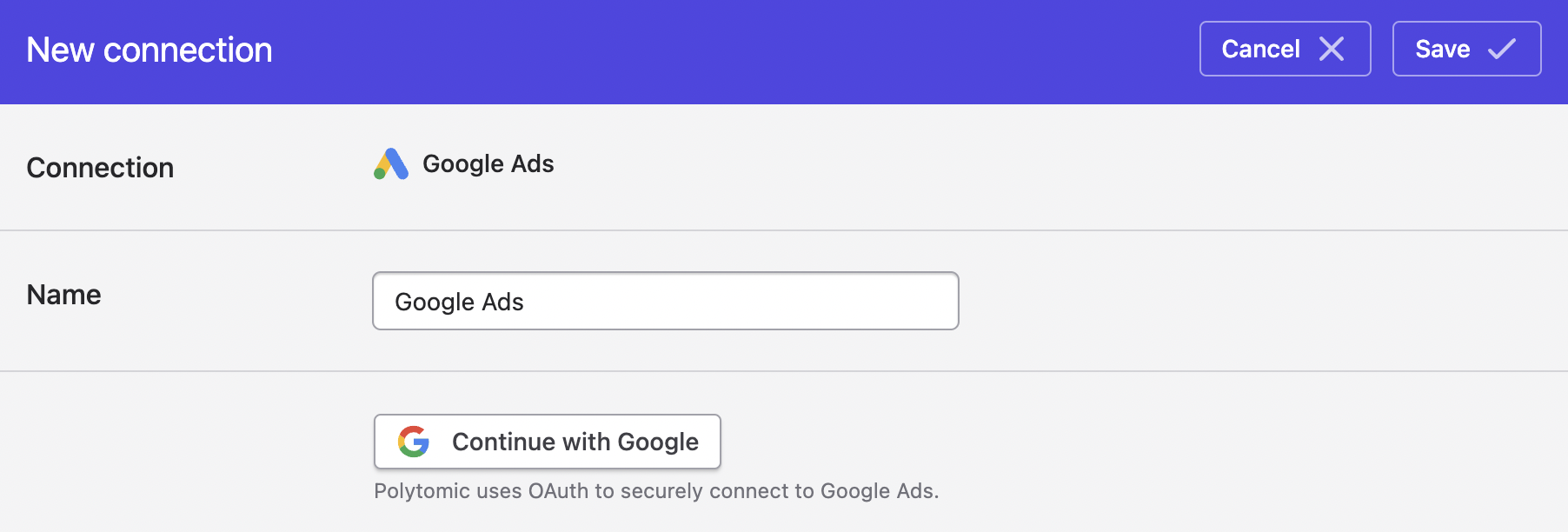
- Click Connect to Google Ads to connect to Google Ads using OAuth.
- If your Google user account has access to your Google Ads accounts, they will show up for you to select:
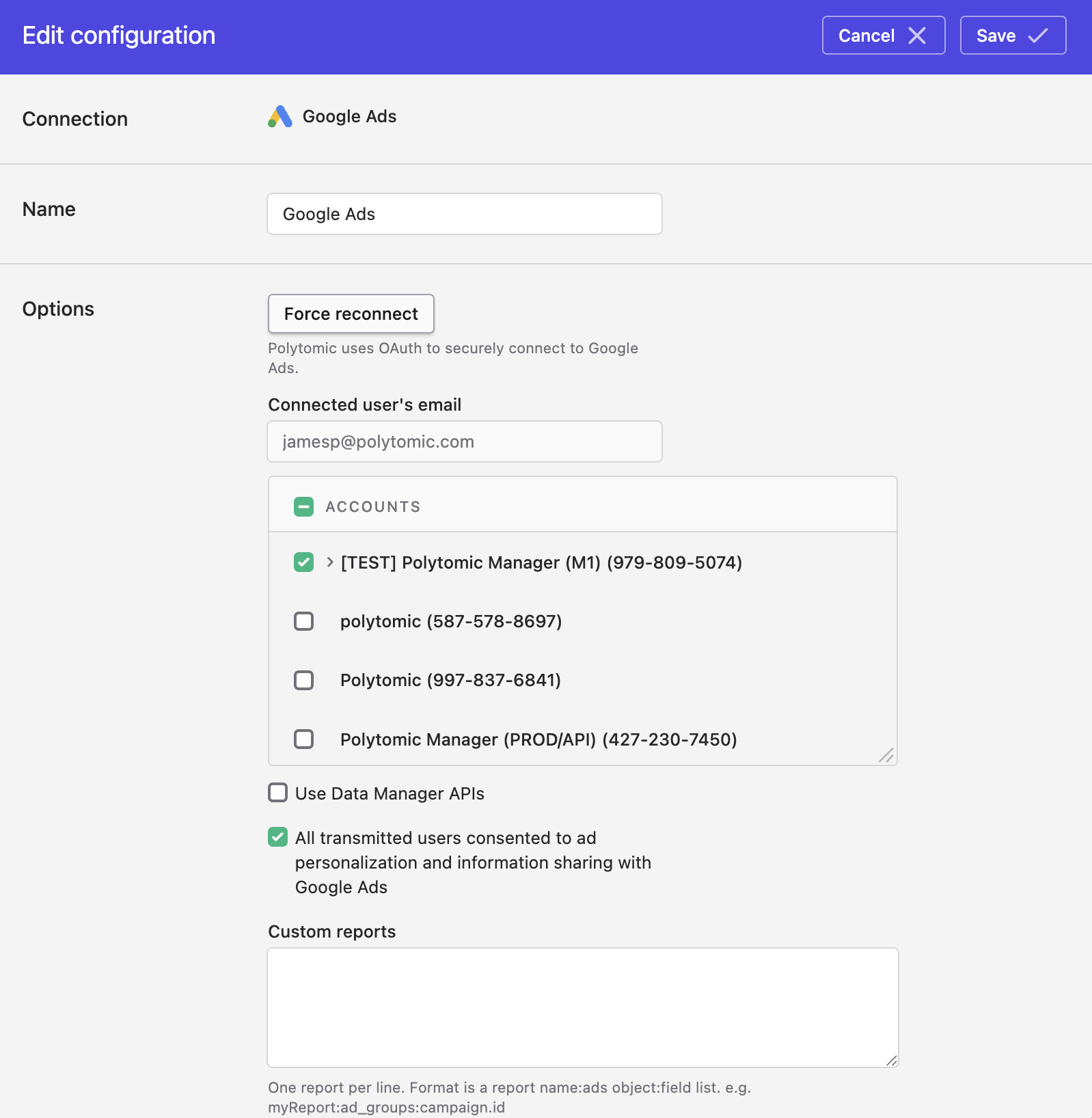
- Select any combination of parent and child Google Ads accounts to give Polytomic access to. All reports will be pulled from selected accounts only.
- Optional: if you want Polytomic to use Google's new Data Manager APIs (see next section for details), check this box.
- Optional: if you will be syncing audiences to Google Ads, make sure to certify permission to do so by checking this box:

- Click Save.
Data Manager API
Google is in the middle of transitioning to a new Data Manager API for sending data to Google Ads. This API remains in development for the year 2026. Activating the Data Manager API for Polytomic's integration will result in the following:
- Per-event error logs for syncing conversion events to Google Ads will be disabled. Instead, the new Data Manager API will only show aggregate error reports for all malformed events you send rather than per-event error details.
- Syncing conversion events to Google Ads will take minutes for Google Ads to confirm receiving the data rather than instantly.
For these reasons you may want to leave the Data Manager API turned off until Google's full migration is done unless you have a particular reason to enable it.
Syncing from Google Ads
You can use use Polytomic's Bulk Syncs to sync ad and campaign performance reports from Google Ads to your data warehouse, databases, and cloud storage systems.
Lookback period
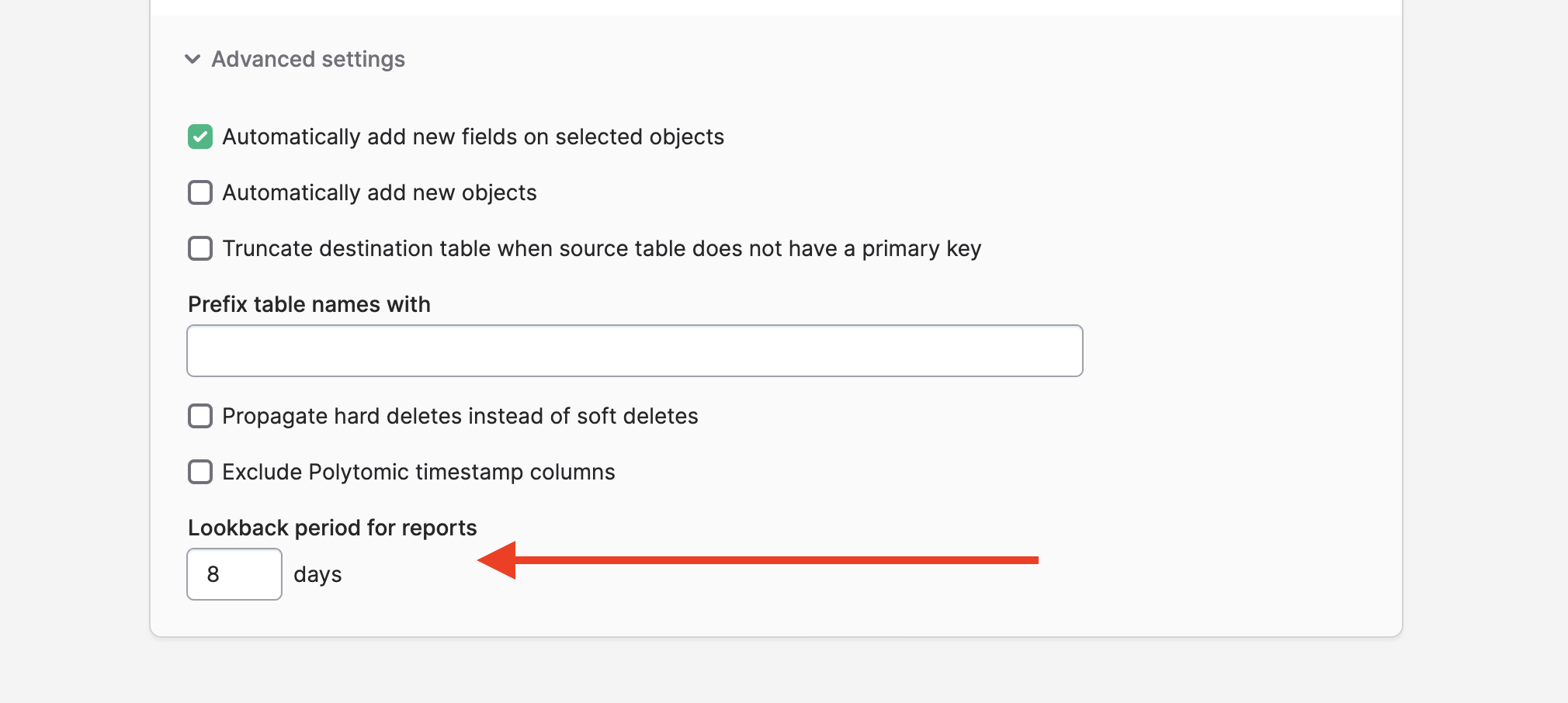
You can set the lookback period for your Google Ads data by going to Advanced Settings in your bulk sync:
Reports date cutoff
You can set a date cutoff for your Google Ads report tables to instruct Polytomic to only pull report data from after a certain date.
You can do so by clicking Add filters in your bulk sync config followed by ticking the Ignore records before cutoff date box then specifying a date:
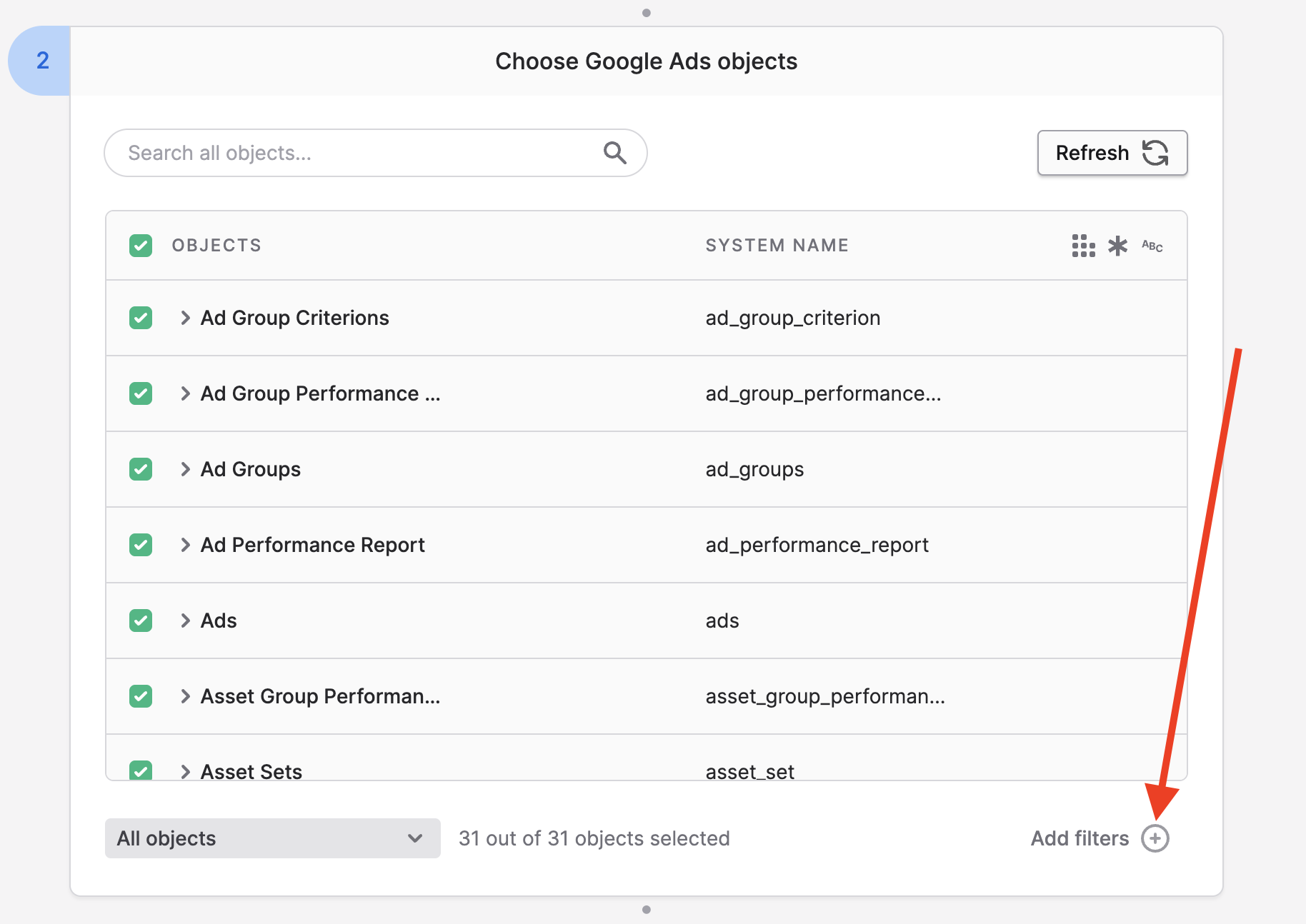
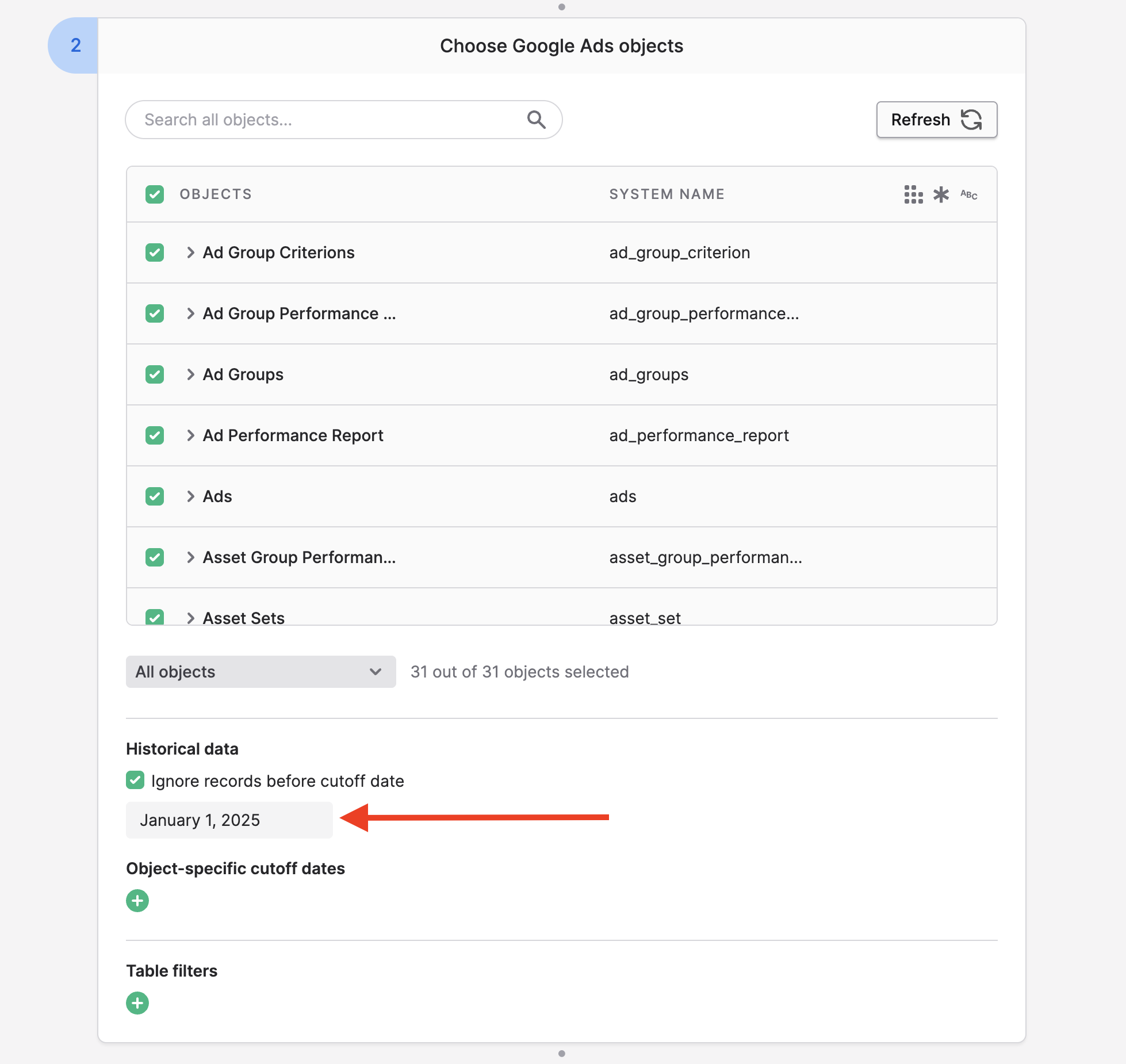
Note that, despite setting a global date cutoff, this will only apply to report tables as per Google Ads' datasets, reports are the only ones with an appropriate date field to filter on.
Syncing to Google Ads
User List processing timeWhen sending user lists to Google Ads, note that it can take up to 48 hours for Google Ads to process those records after Polytomic has sent the data (this is nothing to do with Polytomic).
The time taken depends on the volume you send. Your Polytomic sync will remain in the 'Processing' state in the meantime.
You can use Polytomic's Model Syncs to sync the following datasets from any of your systems (data warehouses, databases, CRMs, spreadsheets, or APIs) to Google Ads:
- Offline conversion events
- Online conversion events
- User lists (i.e. audiences)
If you want Polytomic to create new Google Ads user lists rather than enriching existing ones, simply scroll to the bottom of the Target list in your model sync configuration and select New User List.
User consent to sync audiences to Google Ads
If you will be syncing audiences to Google Ads, make sure this box is checked on your Google Ads connection:

If the box is unchecked when syncing audience data to Google Ads, Polytomic will drop records and issue a warning on the sync history page.
PII hashing
You do not need to hash your PII fields before sending them with Polytomic. If your data is in plain text, Polytomic will hash it automatically. If it's already hashed, Polytomic will send the hashes as-is.
Requirements when syncing to online conversion events
When syncing adjustment events to Google Ads' online conversion events, bear in mind the following sets of required fields:
- Every adjustment event requires these fields:
- Conversion Name
- Adjustment Type
- Adjustment Timestamp (this must be after the conversion timestamp)
- Either an Order ID or a gclid and conversion timestamp. However if your adjustment type is
ENHANCEMENTthen you must send an Order ID.
RETRACTIONandRESTATEMENTadjustment type events are only valid forSALESFORCE,UPLOAD_CLICK, andWEBPAGEconversion actions.RESTATEMENTalso required the Restated Value field to be set.ENHANCEMENTadjustment type events are only valid forWEBPAGEconversion events. This adjustment type requires at least one of these user identifier fields (with a maximum of five fields):- Hashed email
- Hashed phone
- A physical address consisting of all four of these hashed fields: first name, last name, country code, and postal code. If any of these four fields is empty, the match will fail.
Updated about 1 month ago