

Facebook (Meta) Ads
Source and Destination
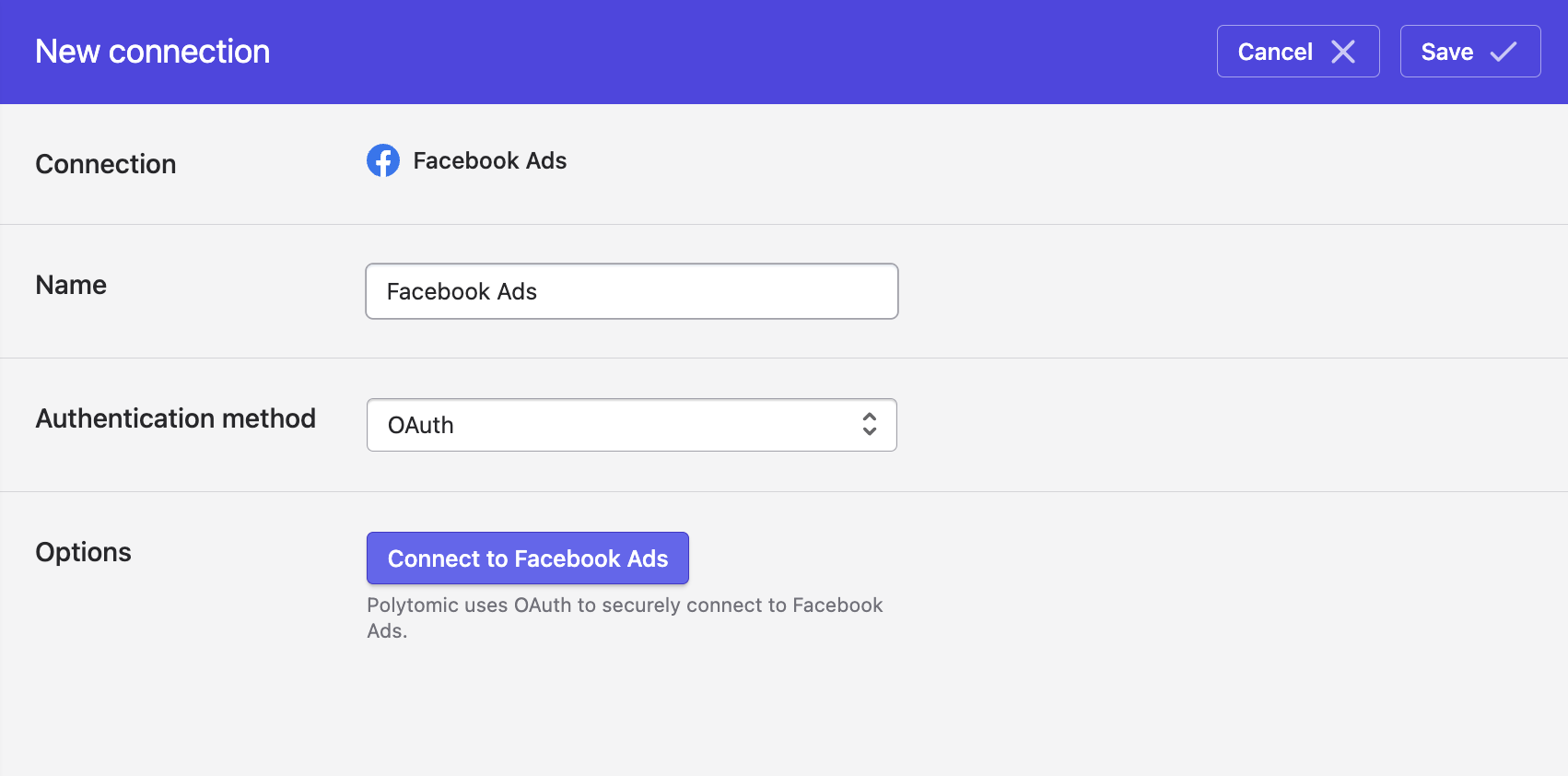
- In Polytomic, go to Connections → Add Connection → Facebook Ads.
-
Click Connect to Facebook Ads to connect to Facebook Ads using OAuth (if you are self-hosting Polytomic in your cloud, prefer token authentication).
-
Click Save.
You'll now be able to create syncs in Polytomic from your source systems to Facebook Ads audiences and conversions.
Syncing from Facebook Ads
You can use Polytomic's Bulk Syncs to sync ad and campaign performance reports from Facebook Ads to your data warehouse, databases, and cloud storage systems.
Syncing to Facebook Ads
You can use Polytomic's Model Syncs to sync the following datasets from any of your systems (data warehouses, databases, CRMs, spreadsheets, or APIs) to Facebook Ads:
- Audiences
- Conversion events
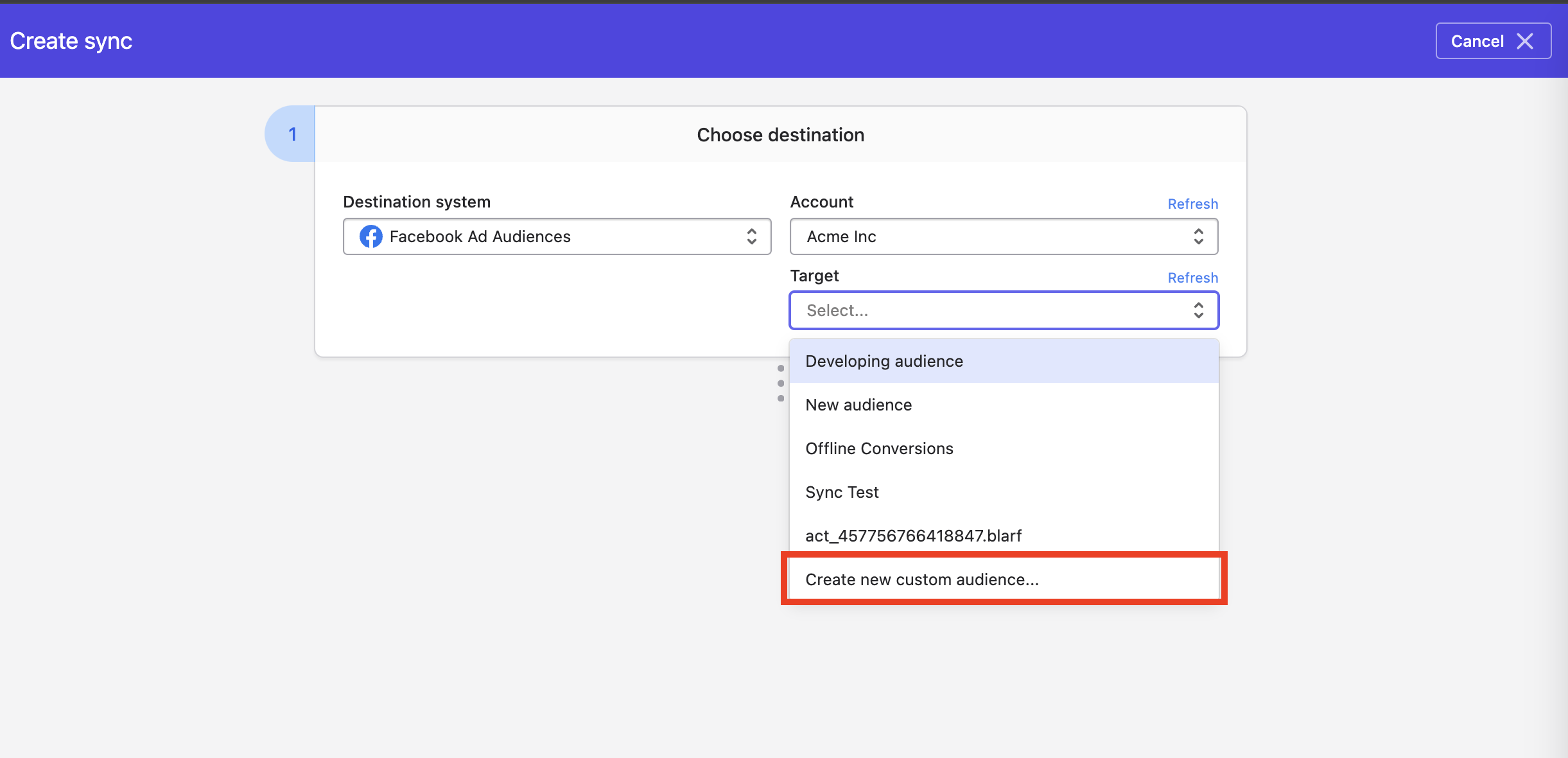
If you want Polytomic to create new Facebook Ads audiences rather than enrich existing ones, simply scroll to the bottom of the Target list in your model sync and click Create new custom audience:
Conversions Click ID format
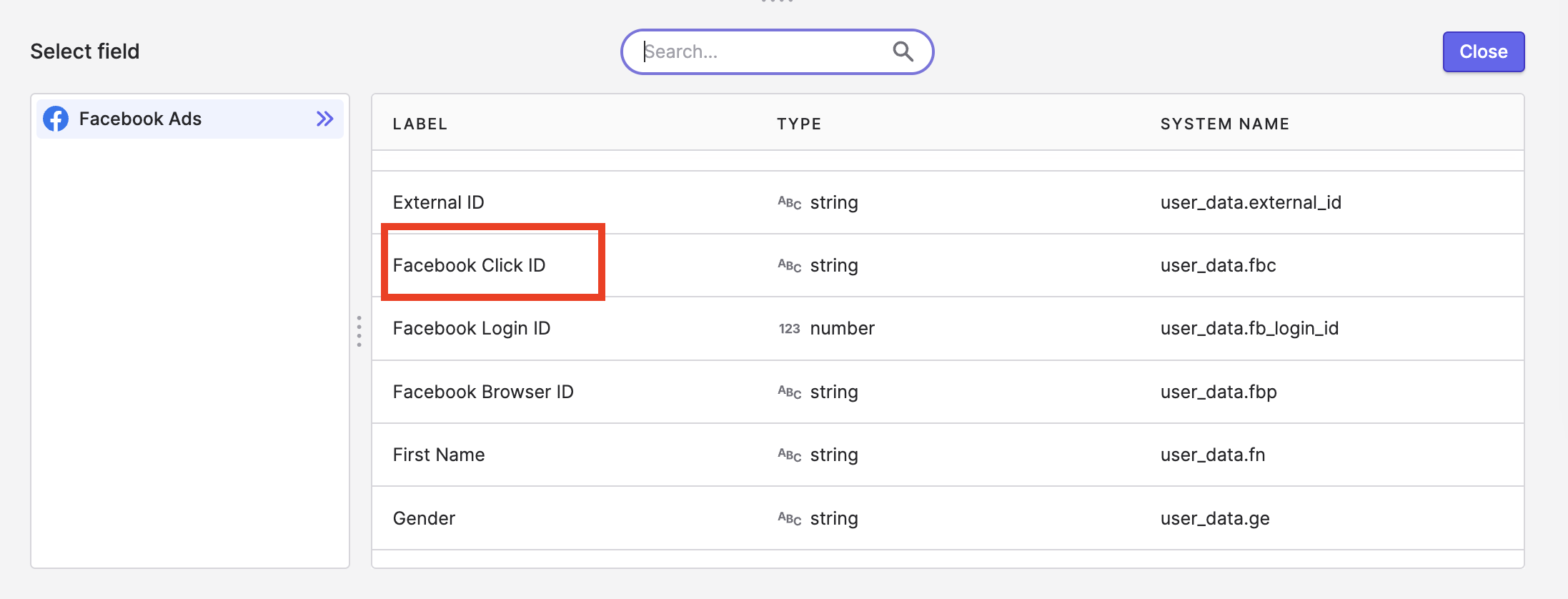
When syncing the Facebook Click ID as part of your conversion event to Facebook Ads, make sure the Click ID format matches that required by Facebook (see Step 2 here: https://developers.facebook.com/docs/marketing-api/conversions-api/parameters/fbp-and-fbc).
It should look something like this:
fb.1.1554763741205.AbCdEfGhIjKlMnOpQrStUvWxYz1234567890
Limited Data Use (LDU) options
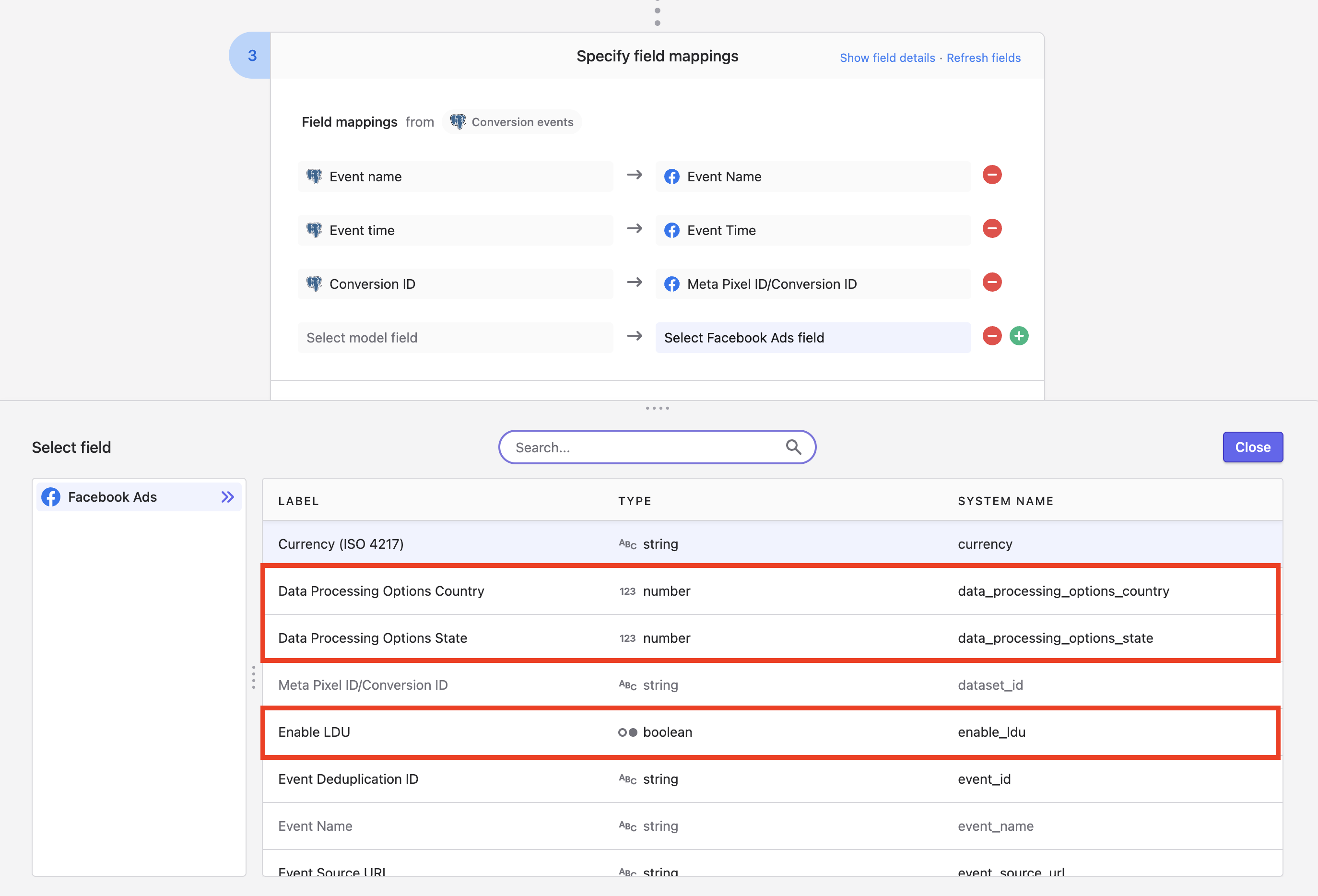
Limited Data Use is an option supported by Meta Ads to account for specific US state privacy laws. Polytomic supports passing the following optional values as part of your conversions payload to Meta/Facebook Ads:
- Enable LDU: a
trueorfalsevalue that tells Meta to enable/disable LDU for the conversion event you're syncing. You can also elect to not include it in which case Polytomic will send nothing for this value. - Data Processing Options Country: this value only applies (and even then it's optional) if you've set Enable LDU to
true. You can send this value if your source conversion event has a country value attached to it. Otherwise, you can ignore this and leave it up to Meta to populate this for you. Right now the only country supported by Meta here is the United States. You can pass Meta's native numeric value (1for the United States) or pass text string values likeUSA,US,United States, orUnited States of America. - Data Processing Options State: this value only applies (and even then it's optional) if you've set Enable LDU to
true. You can send this value if your source conversion event has a state value attached to it. Otherwise, you can ignore this and leave it up to Meta to populate this for you. You can pass Meta's native state numeric values (1000for California,1001for Colorado, etc) or pass text string values that consist of either the two-letter state code or the full state name. Exampes:CA,California,CO,Colorado, and so on.
Updated 3 months ago